Parallel Texts
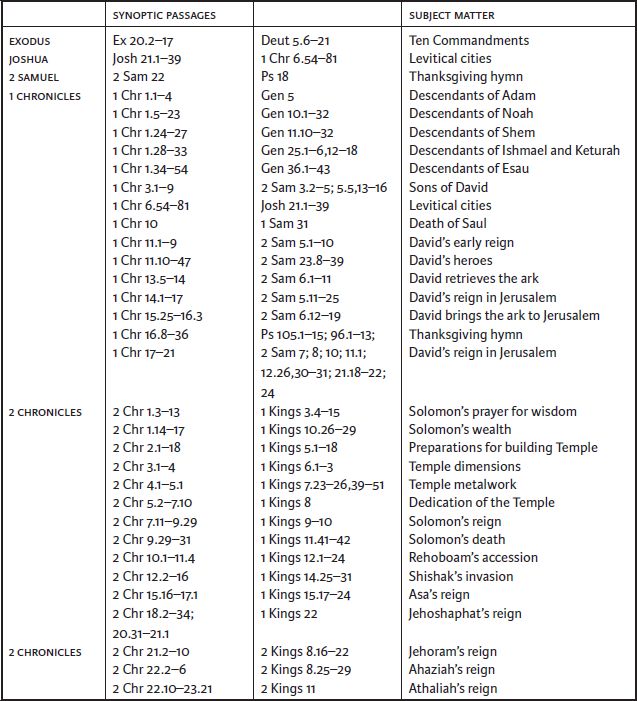
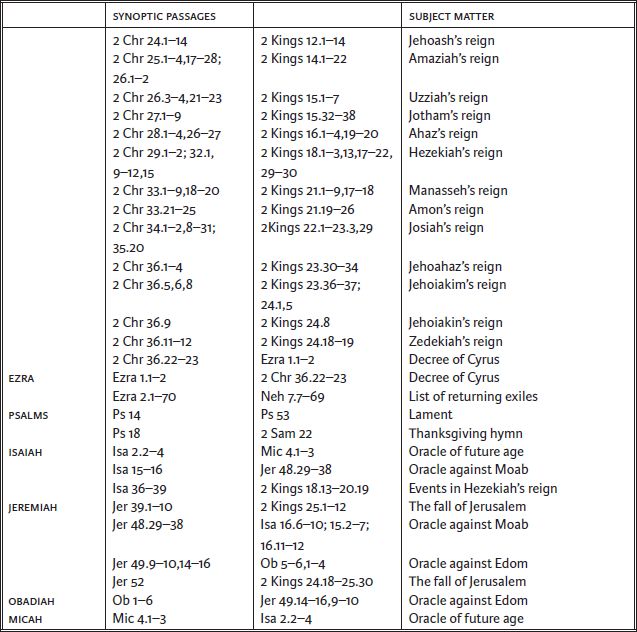
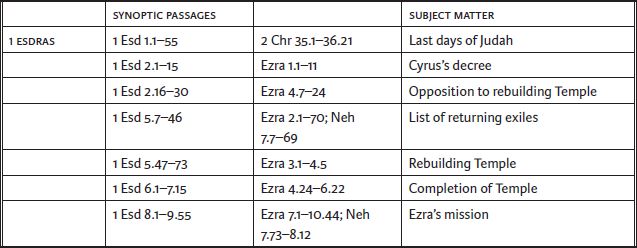
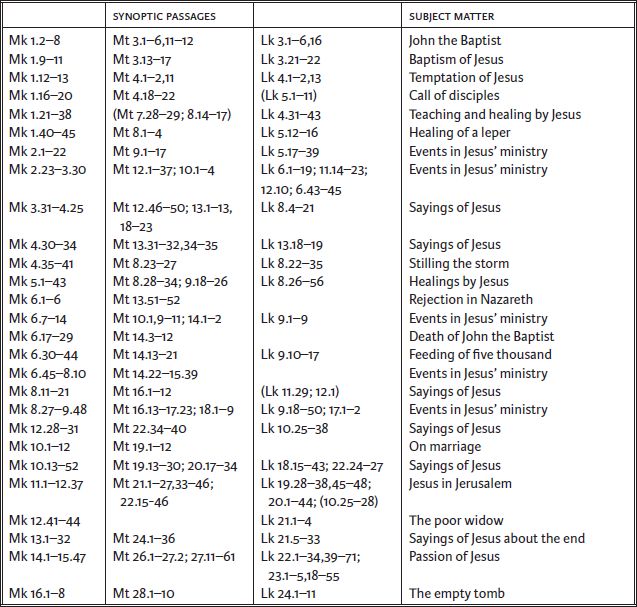
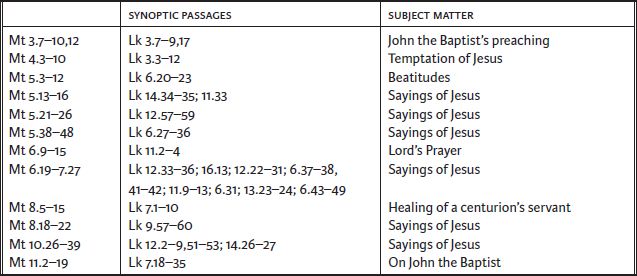
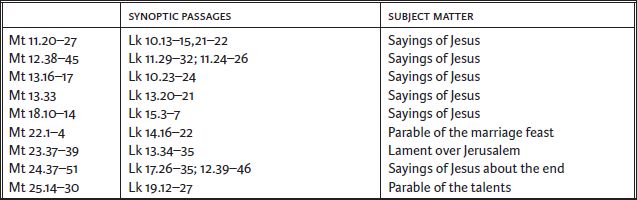
Alongside the widespread evidence of alternative traditions in the Bible, in which two or more authors or traditions deal with the same general subjects (e.g., the two accounts of creation in Gen 1–3; the Gospel of John as compared with the first three Gospels), throughout the Bible there are also literary relationships between one book or part of a book and another. Sometimes the authors or editors of one book simply reproduced their sources verbatim; sometimes they were retouched. Often called “synoptic passages,” because when viewed together their common elements can be seen, these texts are important in understanding the specific purposes and themes of a writer by analyzing what was included, added, omitted, revised, and rearranged. There follows a listing of the larger synoptic passages throughout the Bible. These texts have a demonstrable literary relationship with each other, either direct, where a source can be identified, or indirect, where a source that no longer survives but must be presumed is quoted at length and verbatim, or with only minor modifications in one or more places.
Hebrew Bible
Apocrypha
New Testament
A majority of scholars think that the Gospel of Mark was independently used as a source by Matthew and Luke.
A majority of scholars think that Matthew and Luke used a source that has not survived (known as “Q”).
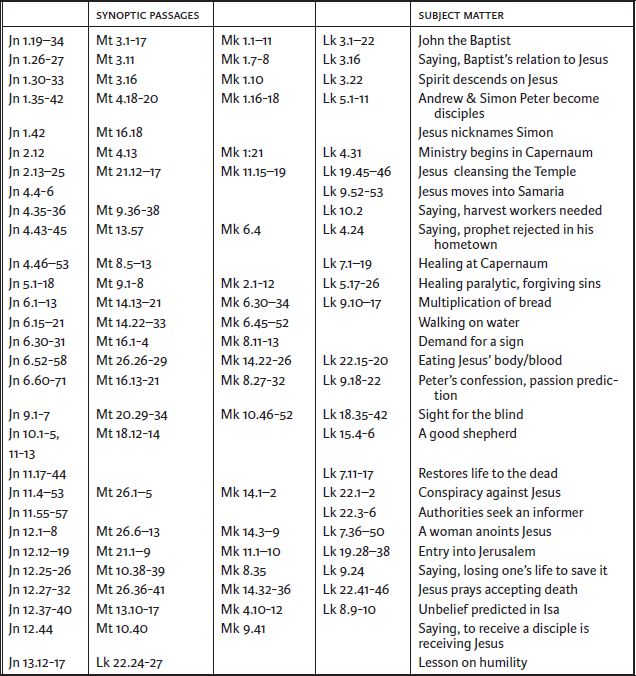
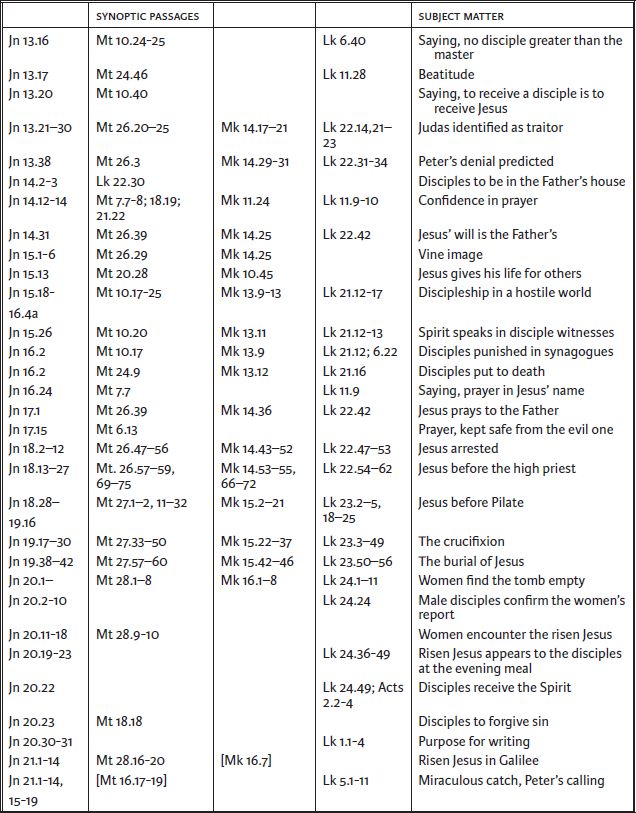
Parallel Texts from the Gospel of John
Although the Gospel of John has the same general outline of Jesus’ life as the Synoptic Gospels, only a few of the same sayings of Jesus found in the Synoptics occur in John, and the chronology and details of events in his life often differ. Important parallels are: